Laptop Open, Windshield Wide: How to Turn Your RV Into a Legit Remote Office
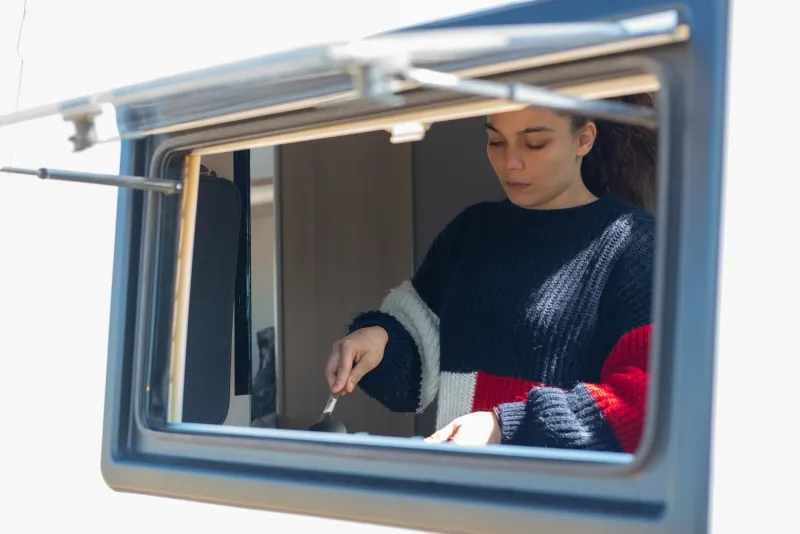
There's a moment that every work-from-anywhere dreamer has imagined: coffee in hand, laptop open, mountains or coastline framing the window behind your screen. For a growing number of Americans, that moment isn't a fantasy — it's Tuesday morning.
The remote work revolution didn't just free people from office buildings. It handed them the keys to a whole new way of living. And a lot of those people are pointing those keys straight at an RV rental. If you've been thinking about combining your job with the open road, here's the honest, practical guide to making it work — not just for a weekend, but for weeks or months at a time.
First, Let's Talk Internet (Because It's Everything)
Nothing derails a remote work setup faster than a dropped connection mid-Zoom call. Campground WiFi, while convenient, is notoriously unreliable — it's shared across dozens of rigs and rarely built for video conferencing or large file transfers. Think of it as a backup, not a primary solution.
Your real options fall into three categories:
Mobile Hotspots are the most accessible starting point. Carriers like T-Mobile, Verizon, and AT&T all offer dedicated hotspot plans with varying data caps. Verizon tends to have stronger rural coverage, which matters when you're camped in places with actual trees instead of cell towers. Many full-time RV workers carry hotspots from two different carriers to cover dead zones.
Satellite Internet has been a total game-changer since Starlink entered the picture. Elon Musk's low-earth-orbit satellite service delivers surprisingly fast speeds — often 100–200 Mbps — even in remote areas. Starlink offers an RV-specific plan that pauses and resumes month to month, which is perfect for renters or part-time nomads. The dish is portable and sets up in minutes. It's pricier than a hotspot, but for serious remote workers, it's often worth every penny.
Campground WiFi still has its place for light tasks — checking email, downloading files overnight, or browsing. Just don't count on it for a client presentation.
Pro tip: Before booking any campsite, check whether it has cell service using coverage maps from your carrier's website. Apps like Campendium also include user-reported connectivity notes.
Ergonomics in a Small Space (Yes, It Matters)
Working hunched over a dinette table for eight hours is a fast track to back pain and frustration. The good news is that RV interiors are more adaptable than they look.
Many RV models — especially Class A motorhomes and larger fifth wheels — have dedicated desk areas or slide-outs that create usable workspace. When you're browsing rentals on AnyTime RV Rental, filter with your work needs in mind. A slide-out that expands the living area can make a huge difference in how livable your workspace feels.
For setups without a dedicated desk:
- Laptop stands prop your screen to eye level and prevent neck strain. Compact, foldable versions work great in tight spaces.
- External keyboards and mice let you position your arms naturally even when your laptop is elevated.
- Portable lap desks with cushioned bases are surprisingly comfortable for couch-based working sessions.
- Lumbar pillows tucked behind your lower back at the dinette bench can extend your comfortable working window considerably.
Natural light is your friend, but direct sun on a screen is your enemy. Window shades that diffuse rather than block light strike the right balance.
Managing Time Zones Without Losing Your Mind
If you're road-tripping across the country — say, from the Carolinas to the California coast — you'll cross through four time zones. That's manageable, but it requires some planning.
Before you head out, have an honest conversation with your manager or clients about your schedule flexibility. Many remote workers find it easier to anchor to one time zone (usually where their employer or primary clients are based) rather than adjusting their schedule as they move.
Google Calendar lets you display a secondary time zone alongside your primary one. Set your home base time zone as the secondary, and you'll always see at a glance when your 2 p.m. meeting actually lands on the road.
Also, be strategic about when you drive. Scheduling your travel days on lighter meeting days — or blocking off driving hours as "focus time" in your calendar — keeps your professional commitments intact while giving you the road time you came for.
Real Talk: What It's Actually Like
People who've done this for more than a few weeks will tell you the same thing: the logistics get easier, but the mindset shift takes longer.
Jamie, a UX designer from Austin who spent four months working out of a rented Class C motorhome, put it this way: "The first two weeks, I was constantly anxious about connectivity and whether I'd hit my deadlines. By week five, I had a system. I knew which campgrounds had solid Verizon coverage, I'd optimized my schedule around my best focus hours, and I was genuinely more productive than I'd been in my apartment."
That tracks with what a lot of work-from-RV converts report: the novelty of new surroundings can actually boost creativity, and the absence of a commute gives back hours that go straight into either work or adventure.
The key is treating your RV not as a vacation vehicle with a laptop in it, but as a legitimate mobile office that also happens to move.
Setting Yourself Up for the Long Haul
A few final pieces of advice before you hit the road with a laptop bag:
- Invest in a good power setup. Running multiple devices all day drains your RV's house batteries. A solar panel add-on or a campsite with 30/50-amp hookups keeps everything charged without burning through your generator.
- Use a VPN. Especially if you're ever connecting through campground WiFi, a VPN protects your work data on shared networks.
- Build buffer into your schedule. Things happen on the road — a flat tire, a surprise hailstorm, a waterfall you absolutely have to stop at. Tight deadlines and rigid schedules don't survive long in an RV.
- Choose your campgrounds deliberately. Full-hookup sites at state parks or private campgrounds give you electricity, water, and often better cell coverage than deep backcountry spots.
The work-from-RV lifestyle isn't for everyone. But for the right person with the right setup, it's one of the most genuinely freeing ways to work that exists right now. And the best part? You can try it without committing to a full lifestyle change — just rent, plan, and hit the road for a few weeks to see if it clicks.
When you're ready to find the right rig for your mobile office setup, AnyTime RV Rental has options ranging from compact vans to spacious motorhomes. Your road trip — and your next great work day — starts here.