Stranded at 2 AM: How to Handle the RV Breakdowns Nobody Warns You About
It always happens at the worst possible moment. You're parked at a remote campsite in the middle of nowhere, the stars are out, and everyone's finally asleep — then something goes wrong. A strange smell. A dead dashboard. Water dripping somewhere it definitely shouldn't be. Your heart rate spikes and your brain immediately jumps to the worst-case scenario.
Here's the thing: most RV renters have been there. And here's the other thing — a lot of those late-night crises are way more manageable than they feel at 2 AM when you're half-awake and running on campfire smoke and s'mores.
This guide breaks down the most common breakdowns RV renters actually deal with in remote locations, what's likely causing them, and how to troubleshoot before you make that panicked call to roadside assistance.
The Electrical Gremlin: When Everything Just... Dies
You flip a switch and nothing happens. Or your house batteries are suddenly reading zero. Or your slide-out won't budge. Electrical issues are the most common middle-of-the-night RV nightmare, and they're also the most frequently misdiagnosed.
Start with the obvious stuff first. Check your battery disconnect switch — it's usually a large red or black switch near the entry door or in a compartment outside. It's surprisingly easy to bump it accidentally. If that's fine, head to your fuse panel (typically inside a cabinet or near the driver's area) and look for any blown fuses. Carry a spare fuse kit — seriously, it costs about $8 and has saved countless trips.
If your shore power hookup isn't working at a campsite, check whether the GFCI outlet has tripped. These are the outlets with the little "Reset" button on them, usually in the bathroom or kitchen. Press it. You'd be amazed how often that's the whole problem.
For battery issues specifically, check your converter — it's the device that charges your house batteries from shore power. If it's not running, your batteries will slowly drain overnight. Look for indicator lights on the converter itself.
When to call for help: If you're smelling burning plastic or seeing any signs of scorching near your electrical panel, stop troubleshooting immediately and get everyone out of the RV. That's a professional situation, full stop.
The Plumbing Disaster: Water Where It Shouldn't Be
A slow drip under the sink. A toilet that won't stop running. A water pump that's cycling on and off every few minutes even though nobody's using water. Plumbing problems are unpleasant, but most of them won't leave you stranded — they'll just make your night miserable if you don't address them.
Dripping faucets and connections are often just loose fittings that vibrated apart during driving. Tighten them by hand first, then use a wrench — but don't overtighten PVC or plastic fittings, or you'll crack them and turn a drip into a geyser.
A constantly cycling water pump almost always means there's a small leak somewhere in the system. Your pump is trying to maintain pressure and losing the battle. Walk through the RV and check under every sink, behind the toilet, and near the water heater. Finding it early saves your pump motor and prevents water damage.
Toilet issues in an RV are their own special adventure. If the toilet seal is leaking (you'll smell it), you can temporarily fix it by adding a little water to the bowl — the water creates a seal. A more permanent fix involves a toilet seal kit, which is worth tossing in your supplies bag before any trip.
When to call for help: If water is actively pouring from a connection you can't reach or tighten, shut off your water pump and your water supply immediately, then call your rental company's emergency line. Flooding inside an RV causes damage fast.
The Engine Won't Start: Sorting Out the Most Panic-Inducing Moment
You wake up, pack everything, climb into the driver's seat, turn the key — and nothing. Or a click. Or a grinding sound that makes your stomach drop.
Click, click, click usually means your chassis battery (the one that starts the engine, separate from your house batteries) is dead or has a bad connection. Check the battery terminals — corrosion is incredibly common, especially in humid or coastal areas. A little baking soda mixed with water and an old toothbrush can clean corrosion off terminals in a few minutes. Then try again.
If the battery is just drained, a jump start will get you going. Most campgrounds have at least one fellow traveler with jumper cables who's been through something similar. Ask around — RV communities are genuinely helpful.
A grinding noise when you turn the key often points to a starter motor issue. This one's harder to DIY, but here's a trick that sometimes works: give the starter motor a firm tap with a rubber mallet or even a shoe. No, seriously. Sometimes a stuck starter gear will free up with a little persuasion. It's not a permanent fix, but it might get you to a service station.
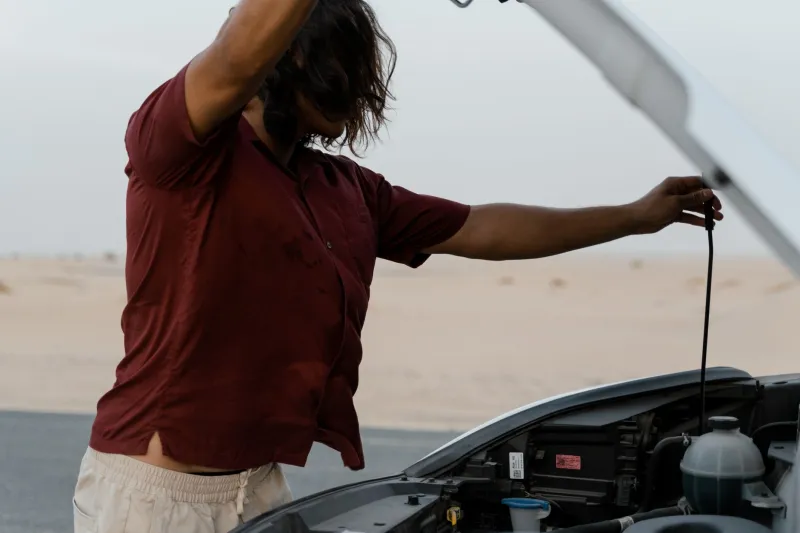
The engine starts but runs rough or overheats — pull over, kill the engine, and let it cool down for at least 30 minutes before checking coolant levels. Never open a radiator cap on a hot engine. If coolant is low, top it off with the correct type (check your rental documentation) and drive cautiously toward the nearest town.
When to call for help: If warning lights are blazing on the dashboard, the engine is smoking, or you hear any kind of knocking from the engine block, don't try to drive it. Call roadside assistance and let them handle it.
The Slide-Out That Won't Slide Back In
This is a special kind of panic because you literally cannot leave until it's resolved. If a slide-out gets stuck extended, first check the obvious: is there anything blocking the track? Debris, a chair, a kid's toy? Clear the path completely.
Most RVs have a manual override for the slide-out motor — it's usually a hex bolt that you can crank by hand with the right tool (often included in your rental's basic toolkit). Check your rental manual or look up the specific model online. This is genuinely something you can fix yourself in 20 minutes with a little patience.
Build Your 2 AM Survival Kit Before You Leave
The renters who handle breakdowns best aren't the most mechanically gifted — they're the most prepared. Before any RV trip, throw these in a small bag:
- Assorted fuse kit
- Jumper cables or a portable jump starter
- Basic screwdrivers and pliers
- Adjustable wrench
- Electrical tape and duct tape
- Baking soda (for battery corrosion)
- Flashlight with fresh batteries
- Your rental company's emergency contact number written on paper — not just saved in your phone
Knowing your rental company's roadside assistance policy before you leave the lot is just as important as any tool. Ask specifically: what's covered, what's the response time in remote areas, and is there a mileage limit on service calls?
Breakdowns happen. They're part of the road trip story — the part that feels terrible at 2 AM and hilarious two weeks later. The goal isn't to avoid them entirely; it's to handle them without losing your cool or your whole trip in the process.