Tiny Kitchen, Big Flavors: The RV Cook's Guide to Eating Well on the Road
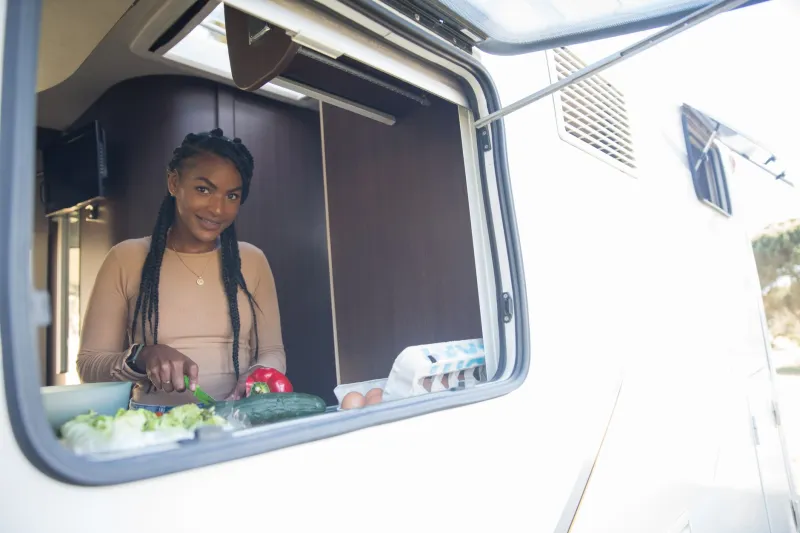
Let's be real for a second. One of the best parts of renting an RV is the freedom to cook your own food—no $22 resort breakfast buffets, no hunting for a decent restaurant in a town of 400 people. But staring down a two-burner cooktop, a mini fridge, and roughly the counter space of a large cutting board? That requires a different approach than your home kitchen.
The good news: people are cooking legitimately great food in RV kitchens every single day. It just takes a bit of strategy upfront.
Rethink What "Cooking" Means Out Here
The first mental shift is letting go of the idea that RV cooking has to mirror what you do at home. You're not trying to replicate your Sunday dinner routine in a rolling kitchen. You're trying to eat well, minimize cleanup, and not spend your whole trip washing dishes.
That reframe opens up a lot. Sheet pan meals, one-pot pastas, foil packet dinners over the campfire, grain bowls built from pre-cooked components—these aren't compromises. They're smart cooking for the context.
Jamie Calloway, who's been renting RVs for extended road trips around the Southwest for the past four years, put it this way: "The first trip I tried to cook like I do at home and I was miserable. Second trip I planned for the space I actually had, and I ate better than I do at home half the time."
That tracks. The constraint forces creativity.
Stock Smart: The Art of the RV Pantry
Storage in an RV kitchen is limited and weirdly shaped. Shelves are shallow. Cabinets are narrow. And everything needs to survive being driven down a bumpy forest road without becoming a disaster.
Build a core pantry that earns its space. Every item you bring should be multi-use. Olive oil, a quality hot sauce, soy sauce, garlic powder, smoked paprika, and a can of coconut milk can flavor a dozen different meals. Canned beans, canned tomatoes, and dried pasta don't need refrigeration and form the backbone of fast, filling dinners.
Decant and consolidate. Ditch bulky packaging before you leave. Transfer spices into small uniform containers. Repackage snacks into zip bags. This sounds fussy but it genuinely transforms how usable your storage becomes.
Use your fridge strategically. Most RV fridges are smaller than apartment fridges, and they work best when they're not crammed full. Prioritize proteins, dairy, and fresh produce. Keep condiments to a minimum—a tiny bottle of hot sauce beats three half-used bottles taking up door space.
Meal Planning That Actually Works
A loose meal plan before you leave saves money, reduces decision fatigue, and means you're not standing in a campsite grocery store at 6 PM trying to figure out dinner.
Here's a framework that experienced RV cooks swear by:
Plan by ingredient, not just by meal. If you buy a rotisserie chicken at the grocery store on day one, it becomes tacos on night one, chicken fried rice on night two, and chicken soup if you stretch it. One protein, three meals, minimal waste.
Front-load fresh, back-load shelf-stable. Start your trip with meals that use fresh vegetables and proteins. By mid-trip, lean into pasta, canned goods, and dried ingredients. This naturally syncs with how your fridge empties out.
Build in a campfire night. Foil packets are an RV traveler's best friend. Toss chopped potatoes, sausage, peppers, and onions in foil with olive oil and seasoning, seal it up, and lay it over coals for 25 minutes. Zero pots, zero cleanup, and it genuinely tastes great. Skewered vegetables and marinated chicken thighs over a grate are equally low-effort.
Maximizing Two Burners (And Whatever Else You've Got)
Most RV kitchens have a two or three-burner propane cooktop, a microwave, and sometimes a small convection oven. A few things that change the game:
A cast iron skillet is worth the weight. It works on the stovetop, over a campfire, and in a convection oven. You can sear, bake, and fry in one pan. Season it well before you leave home.
An Instant Pot or electric pressure cooker is the RV kitchen's secret weapon. It replaces your slow cooker, rice cooker, steamer, and pot in one unit. Chili, pulled pork, risotto, hard-boiled eggs—all done in one vessel with minimal babysitting. It also doesn't heat up your RV the way a stovetop does in summer.
The microwave is more useful than you think. You can steam vegetables, cook fish in a pouch, make mug cakes, and reheat leftovers without firing up the stove. On hot days, that matters.
Rachel Torres, who documents her family's full-time RV life on social media, says the single biggest upgrade she made was adding a small countertop induction burner. "We had three burners instead of two and it changed everything. Pasta water going while we sautéed vegetables. Game changer."
Quick Meals That Actually Satisfy
Here are a few go-to RV meals that hit the sweet spot of easy, cheap, and genuinely good:
Shakshuka: Sauté garlic and onion, add a can of crushed tomatoes and spices, crack in eggs, cover and cook. Done in 20 minutes, one pan, zero cleanup drama. Serve with bread.
Black bean quesadillas: Canned black beans, shredded cheese, whatever vegetables you have. Two minutes per side in a skillet. Add salsa and sour cream if you've got it.
Peanut noodles: Cook ramen or spaghetti, toss with peanut butter, soy sauce, lime juice, sriracha, and a little water to loosen. Top with whatever crunchy things you have—cabbage, peanuts, green onion. Five ingredients, ten minutes.
Campfire nachos: Layer chips and cheese in a cast iron skillet, add toppings, cover with foil, and set over low campfire heat for 10 minutes. This one gets people genuinely excited.
Cleanup: The Part Nobody Wants to Talk About
Dishwashing in an RV is nobody's favorite activity. The sink is small, hot water is limited if you're dry camping, and there's nowhere to put wet dishes.
A few rules that help: Use fewer dishes by eating out of the pan when possible. A single deep bowl for each person beats a full place setting. Collapsible silicone colanders and mixing bowls save cabinet space and double as dish drying racks. Biodegradable dish soap is a must if you're anywhere near natural water sources.
And honestly? Paper plates on campfire nights aren't a moral failing. They're practical.
The Big Picture
Cooking well in an RV kitchen isn't about pretending the limitations don't exist—it's about working with them instead of against them. Plan smart, stock strategically, embrace one-pot cooking, and give yourself permission to eat simple food that tastes good.
The best RV meals aren't the complicated ones. They're the ones you eat outside, at a picnic table, after a long day of driving somewhere worth going. That context makes everything taste better.
Need help finding an RV rental with a kitchen setup that works for your cooking style? Browse AnyTime RV Rental's listings and filter by amenities—some rigs come with full convection ovens and three-burner cooktops. Your road trip kitchen is out there.